
Most Shopify merchants know their revenue number.
Very few know their real costs.
That gap is where profit quietly disappears.
When merchants say, “Sales are growing, but profit isn’t,” the reason is rarely dramatic. It’s usually a collection of small, overlooked costs that compound over time. Individually, they feel insignificant. Together, they decide whether your store survives.
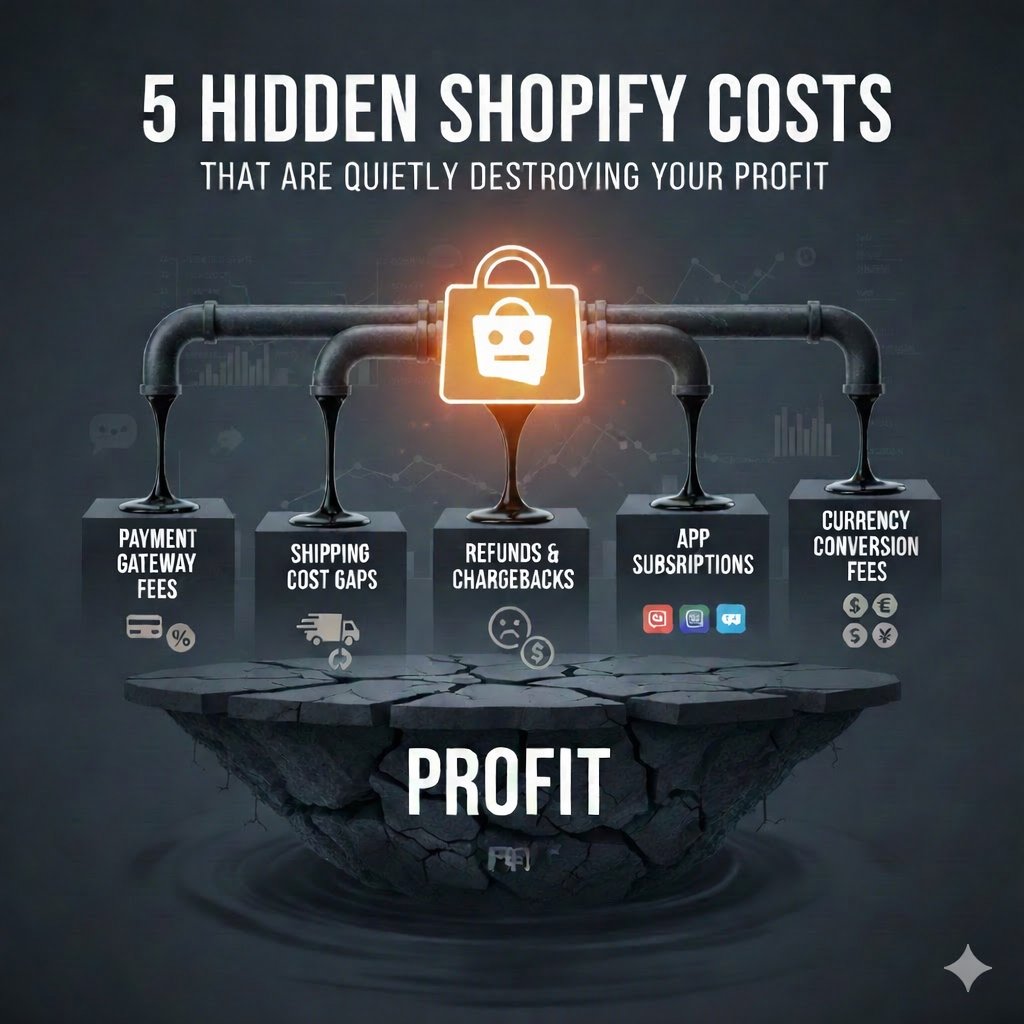
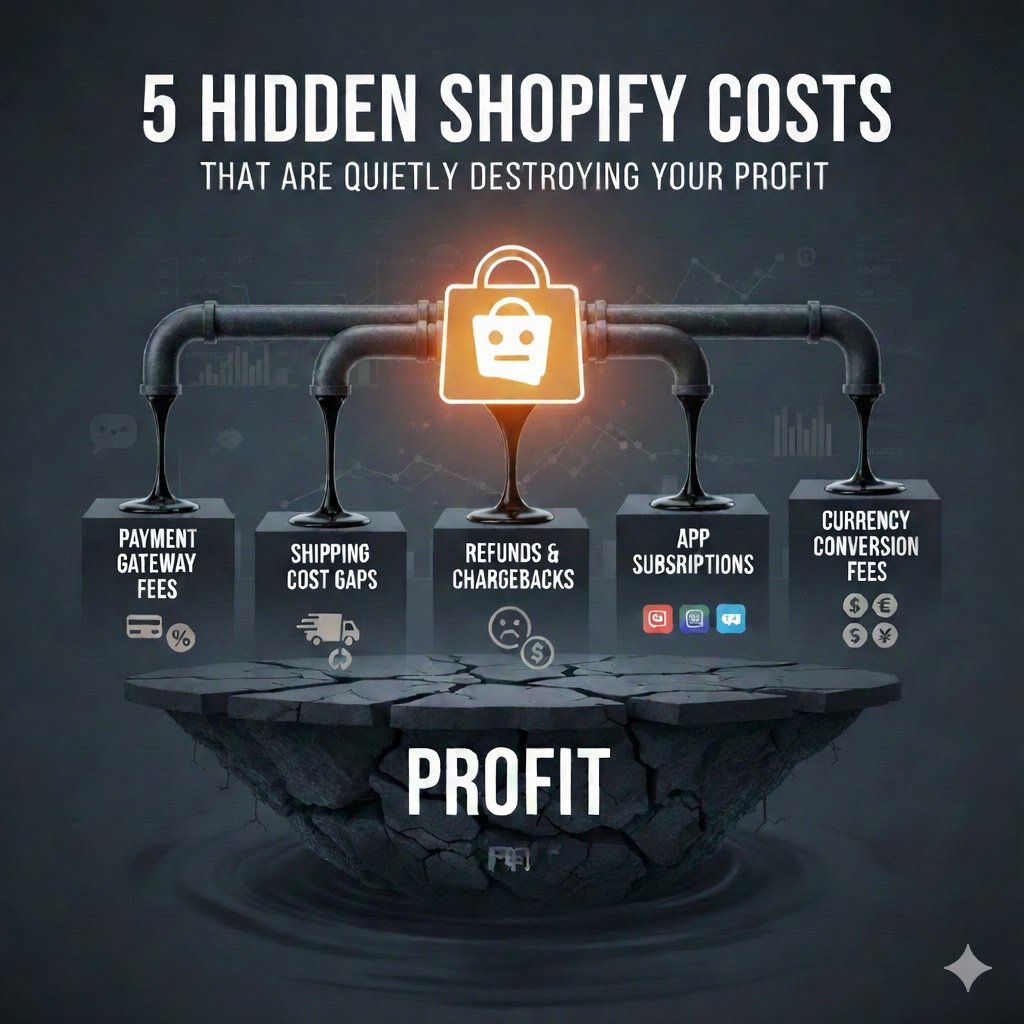
Here are five Shopify costs that are most commonly ignored — and most damaging.
1. Payment Gateway Fees
Stripe, Shopify Payments, PayPal — they all take a cut.
Per transaction, it looks harmless. At scale, it becomes one of your largest expenses.
Many merchants track revenue before fees, then mentally assume the rest is profit. That assumption alone can wipe out several percentage points of margin.
If you don’t subtract transaction fees at the order level, your profit numbers are inflated by default.
2. Shipping Cost Gaps
What you charge customers for shipping is often not what you actually pay.
Carrier rate changes, zone-based pricing, failed delivery attempts, and weight mismatches all create gaps. These gaps don’t show up in Shopify’s revenue reports — but they show up in your bank account.
Free shipping isn’t free.
Someone always pays for it. Often, it’s your margin.
3. Refunds and Chargebacks
Refunded orders don’t just reverse revenue. They often leave behind:
-
Non-refundable payment fees
-
Shipping costs you can’t recover
-
Inventory handling costs
Chargebacks are even worse, adding penalties on top.
If refunds are not deducted from profit properly, you are overstating performance and making bad decisions based on fake success.
4. App Subscriptions (The Silent Killer)
One $10–$30 app doesn’t hurt.
Ten of them do.
Over time, app subscriptions quietly become a fixed operating cost that eats into profit — especially for stores with volatile sales. Many merchants only notice this when cash flow tightens.
Apps should earn their keep. If you don’t measure their impact, they are just expenses with good UX.
5. Currency Conversion Fees
Selling globally introduces hidden friction:
-
Conversion fees
-
Exchange rate differences
-
Settlement timing losses
These costs are rarely visible in Shopify reports but are very real financially. A 1–2% difference per order becomes meaningful at volume.
The Real Problem Isn’t the Costs
The real problem is not seeing them together.
Profit leaks don’t look dangerous when viewed in isolation. They become dangerous when no one is tracking them as a system.
Revenue tells you that customers are buying.
Profit tells you whether your business makes sense.
If you’re not accounting for these costs today, you’re not measuring performance — you’re guessing.